Thursday, August 13, 2026

 Once in a while I see books mentioning Philippines in historical context coming from the point of view other than Spanish or American, likely of course either British or Dutch, or in this case: Portuguese..

https://www.academia.edu/126573753/The_Islands_Beyond_the_Empire_Portuguese_Essays_on_Early_Modern_Philippine_History_16th_18th_Centuries_?email_work_card=view-paper
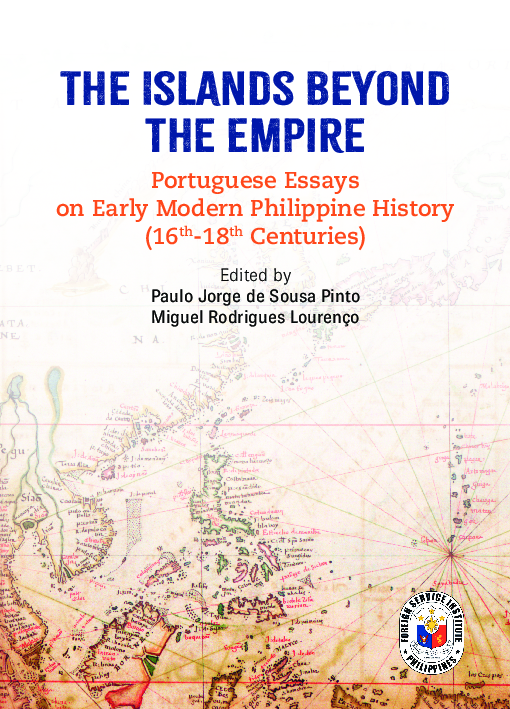


 There are so many existing out there, but no, the Philippines is not the earliest where East meets West, India met the West early, China as well.

When the Portuguese was invaded, Venice and their partners, the Arabs, one group that was mentioned in books were Mamluks, they were displaced. Happy relationship that was profitable for everyone was gone.

In India, when Vasco De Gama entered Indian land, he was met with a man from Poland speaking Spanish, and introduced himself as Jewish using an Arabic name YUSUF. His father was from Spain it seems and later played a large part of De Gama's life from then on. Correia's "Lenda da India" mentioned that this Jewish adventurer was adopted by De Gama, taking the name as Gaspar De Gama:

https://en.wikipedia.org/wiki/Gaspar_da_Gama

You speak to people and they seem to tell me, that for them, history is a recent event when actually history began when men began and begat, w know that Indian traders started coming to Egypt and Rome, we find today, evidence of that. How long was that?

https://www.sanskritica.com/explore/news/sanskrit-inscriptions-discovered-in-egypt-valley-of-the-kings-reveal-ancient-india-egypt-trade-links


Monday, August 3, 2026

SLAVES AND SLAVE TAKING

 James Warren wrote:

"The period from (edited)1768-1848 had been one of growth and cohesion for
the Sulu Sultanate. It put up stubborn opposition to European
Imperialism and proved more than a match for Western powers. This changed
after mid-century. With co-operation among European navies and more
effective use of steam vessels, the Sulu world began to shrink. The trade
of the region began to deteriorate. The datu's main source of wealth was
his following. The destruction of Balangingi and Jolo by the Spanish
between 1846 and 1852 placed serious constraints on the ability of Taosug
to retain control over the Balangingi Samal, their principal source of
slaves. The grooved cannon and gunpowder of the West which had first
attracted Iranun and Samal to Jolo as clients and suppliers of captives
were now operating to drive them apart. There was a progressive
fragmentation of Samal groups because of Spanish incursions and disruption
of the Taosug economy."

Slave taking and head taking have the word used, Pangangayaw (sometimes spelled a bit different depending whose European influence the writer or speaker have "NGAYAO" "NGAYAU".

Today, those who wanted to study this period in Island Southeast Asia (ISA being Indonesia, Philippines, and Malaysia, including parts of Papua and Thailand), there is an assumption that slavery is a custom among the Muslim, hardly, it so happen that is is a custom for all peoples in the area. Muslims, Christians, Buddhists and native animists, even Hindus.

There was a period when demands for slaves were high, and this is where Dutch, Portuguese, Spanish and British were seeking fortunes from the land, its minerals and spice products, then there are the old world, coffee and new world chocolate also became the most valuable cash crop.

Since the Philippines, a Spanish colony was the favorite target for the Sulu Sea slavers, probably because they were not as protected as Dutch/Portuguese/British colonies, it was Spain who made great efforts to stop all these in the 1870s. Of course, the problem persists even during the American occupation of the area by 1898.