Thursday, September 24, 2026

         Bago Naging Pilipinas


    Before the arrival of the Chinese, Indians and Arabs, Island Southeast Asians traded and competed among themselves and Mainland Southeast Asia once became its Entrepot, in Champa, Central Vietnam.

    The Chams speaks an Austronesian language, and shared cultures with Island Southeast Asia, they lie South of China, and East of India. Making it the first place China contacted with Austronesian peoples, and its spice trades. From Champa, the trades spread, silk, gold, silver, ceramics, saltpeter, yes, black powder. Trades between Austronesian people were so that the market developed a language that is simplified and that became the common language among them, while speaking their local languages at home.Bahasa, it means LANGUAGE in English.

    The Hindus introduced both its religion, language, and their social hierarchy. While India has their own set of spices, there are more in Southeast Asia.

    Personally, spices I once thought of as originating in China turns out, originated in my own backyard in some island somewhere. There are many things I mistakenly thought of as something imported from somewhere, but turns out, yes, it is something Filipinos as Southeast Asian share with others in the same region.

    What do I mean? Well, it turns out ancient Rome were trading for spices before they had even known Taprobana is real and not a myth, as I thought to be first spoken of by Ptolemy. Venice and several Italian Republics after the fall of the Roman Empire took over the trades, sending men to China, India and Southeast Asia, Marco Polo is just one character known only because he wrote about it, even though the whole THALASSOCRACY of Venice is based on those who traded. By that time Semites were settling in India and China, Muhammad's (Praise be unto him) wife (sumalangit nawa sila) was thought to be one of those that got rich from the trades.

    African cities benefited from such trades, like Mozambique, Tanzania, Djibouti, Yemen, of course we have Persia who have their own trading corporations into Asia. So it is of no wonder how Southeast Asian warcraft called Caracoa became CARRACK and Lateen sails adopted by Venice. People who had never taken to sea had to learn how to. Portuguese adventurers destroyed that relationship and replaced Venice as European super power, creating an Empire that went all the way to the Spice Islands.

    In India, the Portuguese had to fight against Venice, Arabs and Indians eventually controlling the Western shore of India. Reading books written during the period, I encountered words the writers themselves discovered and I thought of as Spanish or Portuguese origin, no, they are Austronesian, like the word Baril (for a gun), Lancha (high speed boat), bangka (vauka or prao), then discovering the Chinese started using spices they are known for when the spice trades with Southeast Asia began. Five spice powder for example are combinations of spices from Southeast Asia.

    The question I have is why conquer when it is just as possible to just trade, the first thing the Portuguese and Spain did was to create a monopoly trading corporations then used that to finance expeditions and trades. Trading houses of Venice, Milan, Genoa established monopolies, but occupation or conquests did not happen. Not only did the Iberians monopolized the trades, they started conquering and occupying the Islands.

    When Portuguese explorers for example landed in rich African city, they demanded payment for protection, they called it TRIBUTES, today we call that protection racket, but this was what they did. What happened later as they got their demands or face destruction was that their cities became poor and we blame it on their lack of civilization, like Mozambique as one big example.

    Well this is par per the course in Europe it seems, because when the lowland countries of the Netherlands and Belgium revolted and won independence they did the same in Africa and Asia, Spain is no different as USA later on, having the same colonial aspirations. 

Thursday, August 13, 2026

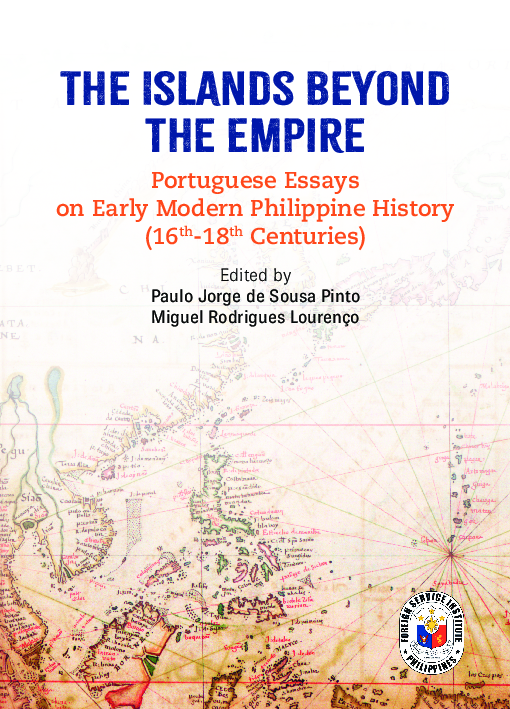
 Once in a while I see books mentioning Philippines in historical context coming from the point of view other than Spanish or American, likely of course either British or Dutch, or in this case: Portuguese..

https://www.academia.edu/126573753/The_Islands_Beyond_the_Empire_Portuguese_Essays_on_Early_Modern_Philippine_History_16th_18th_Centuries_?email_work_card=view-paper


 There are so many existing out there, but no, the Philippines is not the earliest where East meets West, India met the West early, China as well.

When the Portuguese was invaded, Venice and their partners, the Arabs, one group that was mentioned in books were Mamluks, they were displaced. Happy relationship that was profitable for everyone was gone.

In India, when Vasco De Gama entered Indian land, he was met with a man from Poland speaking Spanish, and introduced himself as Jewish using an Arabic name YUSUF. His father was from Spain it seems and later played a large part of De Gama's life from then on. Correia's "Lenda da India" mentioned that this Jewish adventurer was adopted by De Gama, taking the name as Gaspar De Gama:

https://en.wikipedia.org/wiki/Gaspar_da_Gama

You speak to people and they seem to tell me, that for them, history is a recent event when actually history began when men began and begat, w know that Indian traders started coming to Egypt and Rome, we find today, evidence of that. How long was that?

https://www.sanskritica.com/explore/news/sanskrit-inscriptions-discovered-in-egypt-valley-of-the-kings-reveal-ancient-india-egypt-trade-links


Monday, August 3, 2026

SLAVES AND SLAVE TAKING

 James Warren wrote:

"The period from (edited)1768-1848 had been one of growth and cohesion for
the Sulu Sultanate. It put up stubborn opposition to European
Imperialism and proved more than a match for Western powers. This changed
after mid-century. With co-operation among European navies and more
effective use of steam vessels, the Sulu world began to shrink. The trade
of the region began to deteriorate. The datu's main source of wealth was
his following. The destruction of Balangingi and Jolo by the Spanish
between 1846 and 1852 placed serious constraints on the ability of Taosug
to retain control over the Balangingi Samal, their principal source of
slaves. The grooved cannon and gunpowder of the West which had first
attracted Iranun and Samal to Jolo as clients and suppliers of captives
were now operating to drive them apart. There was a progressive
fragmentation of Samal groups because of Spanish incursions and disruption
of the Taosug economy."

Slave taking and head taking have the word used, Pangangayaw (sometimes spelled a bit different depending whose European influence the writer or speaker have "NGAYAO" "NGAYAU".

Today, those who wanted to study this period in Island Southeast Asia (ISA being Indonesia, Philippines, and Malaysia, including parts of Papua and Thailand), there is an assumption that slavery is a custom among the Muslim, hardly, it so happen that is is a custom for all peoples in the area. Muslims, Christians, Buddhists and native animists, even Hindus.

There was a period when demands for slaves were high, and this is where Dutch, Portuguese, Spanish and British were seeking fortunes from the land, its minerals and spice products, then there are the old world, coffee and new world chocolate also became the most valuable cash crop.

Since the Philippines, a Spanish colony was the favorite target for the Sulu Sea slavers, probably because they were not as protected as Dutch/Portuguese/British colonies, it was Spain who made great efforts to stop all these in the 1870s. Of course, the problem persists even during the American occupation of the area by 1898.

Friday, July 24, 2026

PART ONE OF MY INTRODUCTION TO URDANETA 

Andres De Urdaneta was born in Guipuzkoa, Kingdom of Navarre in 1498, as jobs among Basque families, seafaring and ironwork was common especially among those in Legazpi district, Legazpi, Mirandaola, ironwork is and still today a respected occupation in the area.

(Legazpi is a city in the Gipuzkoa province of the Autonomous Community of the Basque Country, northern Spain.

Legazpi is a town of about 9,000 inhabitants located on top of the Urola valley, in Gipuzkoa. Surrounded by mountains, and at the foot of the Aizkorri mountain range, its predominant economic activity is industrial (manufacturing, metal processing, plastics).

The rich industrial tradition of Legazpi goes back to the High Middle Ages, when transformation of iron ore was achieved by means of the haizeolak ("ironworks moved by wind"). During the 14th century, wind energy came to be replaced by water in the metal processing with the foundation of several "ironworks propelled by water" (ur 'water' and ola originally 'shack', are the two lexical components of "Urola", a river crossing Legazpi). This industrial tradition had its continuity in modern times, and Legazpi became one of the most important metallurgic centers in the industrialized modern Basque Country.

One of the 14th century ironworks (called Mirandaola) has remained in place to date like nowhere else in the Basque Country. It is the heart of a thematic park with an educational and touristy vocation, where traditions and ways of living from the past are shown.


Miguel Lopez de Legazpi was 50 years old in 1561. Urdaneta received instructions to sail to the Philippines in 28th of May 1560. The Armada Urdaneta and Legazpi built left in 1564.
 
  The letter took 3 months to arrive in Mexico City, first arriving in Vera Cruz, then transported inland to Mexico C
ity. Andres de Urdaneta answered the letter that he is no longer a subject of his majesty, since he is now an Augustine monk. He was answered with a query on who would he recommend for undertaking the exploration, he recommended Miguel Lopez de Legazpi, a kin who would be ideal since they are of the same mind.
 
  The letter brought back memories of his early years as he went to war for Charles I of Castile and Leon, a child soldier at 14 in Northern Italy, fighting the French and its allies of Italians and Germans. He was awarded a Captain’s stipend for his heroism.

Captain Andres de Urdaneta being an orphan buried himself in his studies, studied mathematics and cosmology, as a trained navigator, he was commanded by King Charles V of the Holy Roman Empire to join the expedition to the Moluccas. Charles Became the Emperor in 1518, and Charles I in 1516.

The Emperor believed that the Demarcation line agreed upon by Portugal and Spain was in the Moluccas and not in Papua, so he set to assert this and wanted to settle and conquer the islands for Spain as it is the source of the many spices European markets demand. Magellan was sent for this purpose, a Portuguese who failed to gain confidence of his King and Commander, Afonso Albuquerque. He dissented and refused to sign the agreement to invade Goa.

Magellan failed to complete his mission, he did name the archipelago he saw as “Islas de San Lazaro” as he arrived there during the Feast of Saint Lazarus. He was killed in Mactan.


THE LOAYSA EXPEDITION


Andres de Urdaneta was assigned in one of the ships for the expedition:


(1) NOMBRES  DE  LAS  NAOS   Su  porte en toneladas  CAPITANES

Santa  María  de  la  Victoria                                 360                      Frey  García Jofre  de  Loaisa.

Sancti Spiritus                                                       240                      Juan  Sebastián  de  Elcano

                                                                                                            Capellán(?) Urdaneta

Anunciada                                                              204                      Pedro  de  Vera

San Gabriel                                                              156                      Rodrigo  de  Acuña

Santa  María  del  Parral                                          96                        Jorge Manrique de  Nájera

San Lesmes                                                              96                        Francisco  de Hoces

Patache Santiago                                                      60                        Santiago  de  Guevara;

                                                                                                            Capellán  Juan  de  Areyzaga

Total number of individuals in the armada was 450


This was written in https://w390w.gipuzkoa.net

However I cannot find any information that claims Urdaneta as Chaplain, but was named as one of the Captains in the expedition. In 1526 Urdaneta was 16 or 17 years of age.


List of officers were mostly of Basque origin were in Historia General de Indias by Oviedo page 35 Tomo1 Book2 and I cannot see what Urdaneta’s job was. He joined the religious order later on though.

Thursday, July 23, 2026

 Conquista and naming 

When Magellan and Spain's monarchy agreed to conquer and settle the islands North of the Spice Islands, Portugal already took and conquered Western India from their Muslim rulers and their Italian partners.

Vasco de Gama went around the African Coasts and demanded tribute where he found trades, he demanded a portion in tribute, Mozambique is what is burned in my mind, but there are more.

Gaspar Correa in his LENDAS DA INDIA tells of his travels and conquests, an English Translation was published by THE HAKLUYT SOCIETY and it is interesting reading.

https://archive.org/details/voyageroundworld01tayl/page/n7/mode/2up

Discoveries as we were told are different when viewed from nations other than Spain or Portugal since it turns out, Venice was there when Vasco de Gama arrived and changed everything. In fact, city republics of Genoa, Milan, Venice were there already, trading for spices, silks and technology.